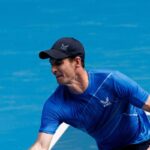
Andy Murray
Andy Murray won three Grand Slam singles titles and became the first British man to win a major in 76 years, ending a wait that had run since Fred Perry in 1936. He beat Novak Djokovic to take the 2012 US Open, then won Wimbledon in 2013 and again in 2016.
He is also the only man to have defended an Olympic singles gold, winning in London in 2012 and Rio in 2016, and he led Great Britain to the 2015 Davis Cup, their first in 79 years. He reached No. 1 in 2016 and held it for 41 weeks, which took displacing Federer, Nadal and Djokovic at their peak.
He retired in August 2024 after the Paris Olympics, where his last match was the men’s doubles quarter-final alongside Dan Evans.
Player Profile
| Full name | Andrew Barron Murray |
|---|---|
| Date of birth | 15 May 1987 |
| Birthplace | Glasgow, Scotland |
| Nationality | British |
| Plays | Right-handed (two-handed backhand) |
| Turned pro | 2005 |
| Retired | August 2024, after the Paris Olympics |
| Grand Slam titles | 3 |
| Olympic golds | 2 (London 2012, Rio 2016) |
| Career titles | 46, including 14 Masters 1000 |
| Weeks at No. 1 | 41 |
Career Form & Notable Results
| Paris Olympics 2024 | Retired after the men's doubles quarter-final, played alongside Dan Evans, lost 6-2, 6-4 |
|---|---|
| Wimbledon 2016 | Championhis second Wimbledon title and third and final major |
| Olympic Games 2016 | Championbecame the only man to successfully defend an Olympic singles gold |
| Davis Cup 2015 | Championled Great Britain to their first Davis Cup title in 79 years |
| Wimbledon 2013 | Championthe first British man to win the Wimbledon singles title since Fred Perry in 1936 |
| US Open 2012 | Championbeat Novak Djokovic for his first major, and Britain's first in 76 years |
Playing Style & Strengths
Murray was the best defensive court-coverer of his generation and built a game around turning defence into offence: absorbing pace, extending rallies past the point where opponents wanted them, then changing direction with a two-handed backhand that was among the cleanest in the sport. The lob and the passing shot were weapons rather than escapes.
The context that defines his career is the company he kept. Three majors would read modestly in another era; he won them while Federer, Nadal and Djokovic were collecting more than sixty between them, and he beat all three in finals. The cost was physical. A chronic hip problem eventually required resurfacing surgery, and the player who came back after it was a different one.