US Open
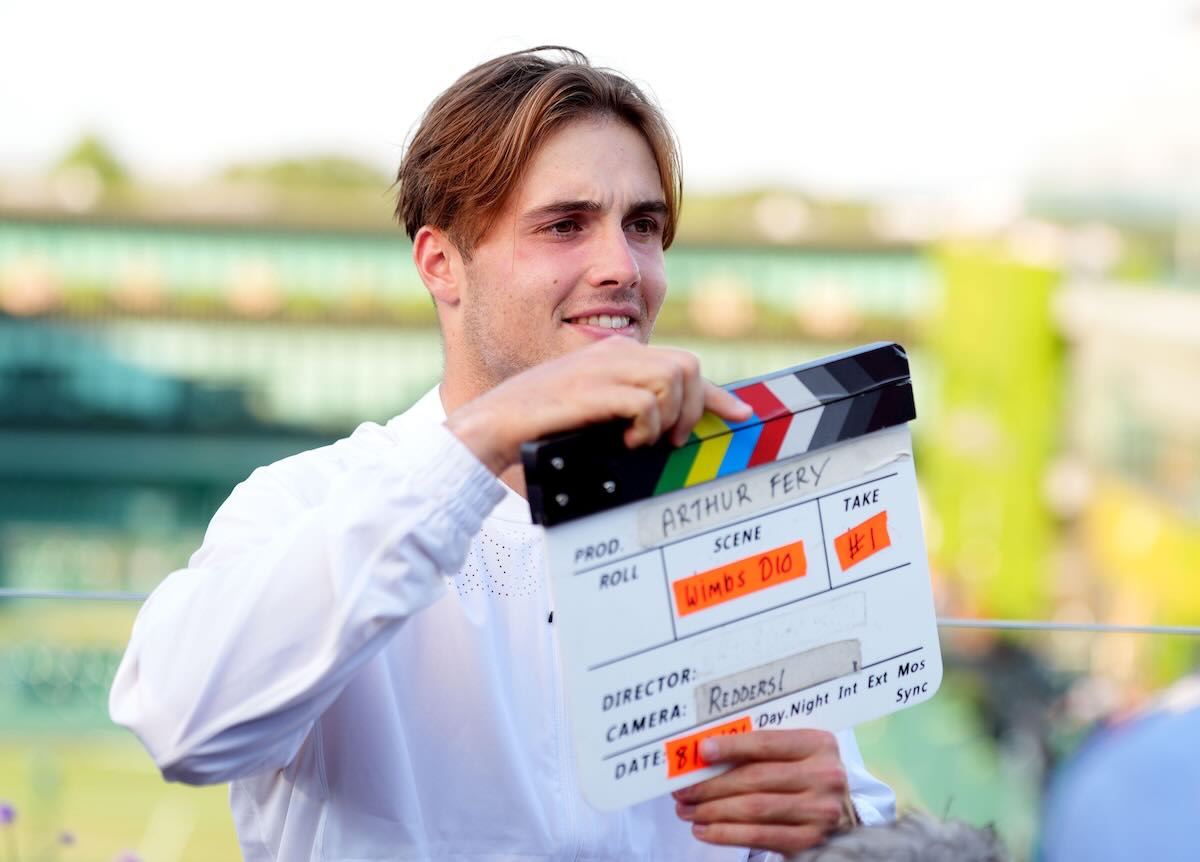
Six weeks ago Arthur Fery was ranked No. 114 in the world and in the Wimbledon draw only because the All England Club gave him a wild card. He is now British No. 1, ranked inside the world’s top 40, and seeded at a Masters 1000. It is the fastest rise any British man has managed in a decade, and it has happened to a player almost nobody outside the sport had heard of in June.
Fery had never been inside the world’s top 100 when Wimbledon began. He left it a semi-finalist, the lowest-ranked man to reach the last four at SW19 since Goran Ivanišević — ranked No. 125 — went all the way to the title in 2001.
The match that made the run was the third round. Against Zizou Bergs he trailed by two sets to one and then 4-1, a double break, before winning 2-6, 7-5, 2-6, 7-6(3), 7-6(10-5), the fourth and fifth sets both settled in tie-breaks. Players do not usually come back from that. He then ended Grigor Dimitrov‘s tournament in the fourth round and beat Flavio Cobolli 6-4, 7-6(4), 6-0 in the quarter-final, running away with a one-sided third set as Centre Court got louder than it had in years.
Alexander Zverev stopped him in the semi-final. By then the ranking had already moved: he was projected up some 78 places, and he is only the fifth British man in the Open Era to reach a Wimbledon semi-final, after Roger Taylor, Tim Henman, Andy Murray and Cameron Norrie.
The most common question about Fery is whether he is actually British. He was born in Sèvres, just outside Paris, on 12 July 2002, and he plays for Great Britain. He grew up in Wimbledon and went to King’s College School there — a mile or so from the courts where he made his name.
The family is not a typical tennis story. His father, Loïc Féry, made his money as a financial trader in Hong Kong and London and in 2009 bought the French club FC Lorient, which he ran as owner and president until selling it in 2026, staying on as president. His mother, Olivia, played professionally and reached a career-high WTA ranking of No. 225. Fery grew up around the tour without ever being a product of a national academy system.
The more interesting decision came at 18. Rather than turn full-time professional, Fery went to Stanford in 2020 and stayed three years, becoming a two-time ITA All-American and, in 2023, the first Stanford player ranked No. 1 in American college singles since Bob Bryan in 1998.
British tennis has historically been suspicious of the American college route, treating it as the option for players who are not quite good enough. Fery is the strongest recent argument against that: he arrived on tour later than his peers, with a degree and four years of high-level competition behind him, and he has climbed faster at 24 than most do at 21.
The Zverev match is remembered almost as much for an argument as for the tennis. Four games in, already a break down, Fery was convinced a Zverev serve he had been unable to touch had clipped the net cord on its way past him. The umpire had not called it, and it was the second let Fery believed had been missed in those opening games.
“This one was way more obvious than the first one,” he told the chair. His wider point was the more interesting one: Wimbledon, he noted, has not used electronic let detection for some time, leaving the call to the umpire’s ear alone. A player in his first Grand Slam semi-final, on Centre Court, was asking why the tournament was relying on hearing rather than a sensor.
He was also made to replay a point later in the match after a ball kid moved early. None of it decided the outcome — Zverev was the better player — but for a British audience meeting Fery for the first time, the willingness to stand and argue his corner on the biggest court in the sport was part of the introduction.
Ranked No. 37, Fery is now the highest-ranked British man — ahead of Jack Draper and Cameron Norrie. He has been careful about it in public, saying he feels no added pressure from the label, and the caution is sensible: a ranking built substantially on one extraordinary fortnight is a ranking with points to defend rather than points banked.
That is the honest read on his position. Wimbledon 2026 accounts for a large share of the ranking, and the twelve months from here will be judged on whether he can win matches at this level in weeks when nothing romantic is happening.
The 2026 Cincinnati Open gave the first answer, and it was encouraging rather than conclusive. Seeded 32nd — his first Masters 1000 seeding — Fery came through a two-and-a-half-hour opener against James Duckworth, then drew fifth seed Alex de Minaur in the round of 32.
He lost 7-5, 7-6(3), across a match rain interrupted four times. The detail that matters is the second set: de Minaur led 5-1 and stood one game from a routine win, and Fery won five games in a row to force the tie-break before the Australian finally closed it out. Against one of the best movers in the game, on a surface that does not suit a grinder, he was a handful of points from a deciding set.
De Minaur has beaten him and gone on; Fery has gone home with evidence. Both things are true.
The US Open main draw begins on 30 August, and for the first time Fery arrives at a major as a seeded player rather than a wild card. That inverts the pressure entirely. At Wimbledon he had nothing to lose and a crowd willing him on; at Flushing Meadows he will be expected to beat lower-ranked opponents, in heat and noise, on the quickest surface of the four.
It is the least sentimental test he has faced, and it is the one that will tell us whether the summer was a fortnight or a career turning. Either way, British tennis has a genuine top-40 player who was ranked No. 114 in June, and that has not happened for a very long time.
How is Arthur Fery British? He was born in Sèvres, just outside Paris, on 12 July 2002, but grew up in Wimbledon and went to school there. He holds British nationality and has always represented Great Britain.
How old is Arthur Fery? He is 24, having turned 24 two days after his Wimbledon semi-final.
How tall is Arthur Fery? 175cm, or 5ft 9in — small for a modern professional, which is part of why his game is built on movement and depth rather than serve.
Who are Arthur Fery’s parents? His father is Loïc Féry, a financier who owned and ran the French club FC Lorient from 2009 until selling it in 2026, remaining as president. His mother, Olivia, played professionally and reached a career-high WTA ranking of No. 225.
What is Arthur Fery’s ranking? World No. 37, and British No. 1. His live position moves with results — the ATP rankings page tracks it.
Did Arthur Fery go to university? Yes. He spent three years at Stanford from 2020, was a two-time ITA All-American, and in 2023 became the first Stanford player ranked No. 1 in American college singles since Bob Bryan in 1998.
Read more: Arthur Fery player profile · When does Arthur Fery play next? · British tennis: the year the pecking order flipped · Cincinnati Open round of 32 · US Open 2026 · Wimbledon 2026
Every player we cover is in the players index, and the season is mapped in the 2026 tennis calendar.