US Open
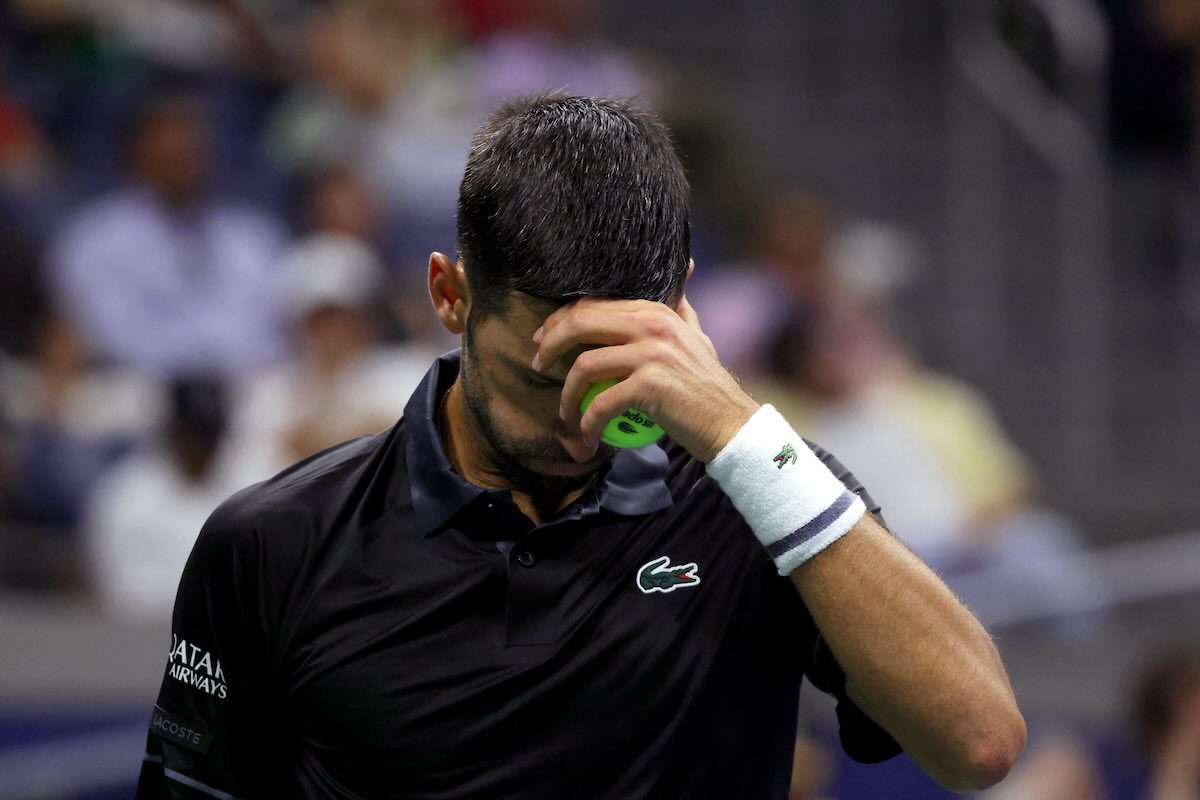
When Novak Djokovic lost in the first round of the US Open on Sunday, a run that had lasted 23 years quietly ended. For the first time since Roland Garros 2003, the second round of a Grand Slam contains none of Djokovic, Roger Federer or Rafael Nadal. It is the kind of statistic that invites elegy, and most of the reaction this week has obliged. But the succession it supposedly announces was settled some time ago, and 2026 is the season that proves it.
The last major second round without one of the three was Roland Garros in 2003, where Federer lost his opening match to Luis Horna, then ranked 88th. Nadal had not yet played a major. Djokovic was 16 and two years from his main-draw debut. Six weeks later Federer won Wimbledon, and the era began.
Between that Wimbledon and this one, 92 majors were played (the 2020 Wimbledon was cancelled) and the three of them won 66. Djokovic has 24, Nadal 22, Federer 20. Everyone else in the world, across 23 years, shared the other 26.
The ending itself was gradual. Federer stopped first, in September 2022, playing doubles alongside Nadal at the Laver Cup. Nadal followed in November 2024 at the Davis Cup Finals in Malaga, stuck on 22. That left Djokovic carrying the streak alone for seven majors, which he did without ever losing an opening match, until Mariano Navone beat him 7-6(5), 5-7, 4-6, 6-2, 6-1 in four hours and 36 minutes, the longest first-round match of his Grand Slam career. It ended a run of 78 consecutive first-round wins at the majors.
The season on its own tells the story better than the 23-year statistic does. In January he was a set up in a Grand Slam final. In August he was out on the first Sunday.
| Grand Slam | Djokovic | Beaten by |
| Australian Open | Runner-up | Carlos Alcaraz, in the final |
| Roland Garros | Third round | João Fonseca, from two sets down |
| Wimbledon | Semi-final | Jannik Sinner, in straight sets |
| US Open | First round | Mariano Navone, in five |
He has not announced a retirement and says he wants to play on to the 2028 Olympics. We covered what that means in Djokovic at 39: no 25th Slam in 2026, so is retirement next?
Here is the part the elegies miss. If the Big Three era had merely been fading, you would expect one obvious heir hoovering up the majors. That is not what 2026 looks like. Six Grand Slam titles have been decided this season and they went to six different players, three of them winning a first major.
| 2026 | Men’s champion | Women’s champion |
| Australian Open | Carlos Alcaraz | Elena Rybakina |
| Roland Garros | Alexander Zverev (first major) | Mirra Andreeva (first major, aged 19) |
| Wimbledon | Jannik Sinner | Linda Nosková (first major) |
| US Open | In progress | |
Zverev’s win at Roland Garros is the one that matters most to this argument. He had spent a decade as the best player never to win a major, the exact category the Big Three created and then kept full. That category is now emptying, which is a more meaningful marker of the end of an era than any one first-round defeat.
Alcaraz has seven majors, Sinner five: twelve between two players who are both still in their twenties. Their head-to-head stands at 10-7 to Alcaraz across 17 meetings, already one of the most-played rivalries in the modern men’s game. That is the closest thing tennis has to a new axis.
What it is not, yet, is a duopoly of the kind the Big Three ran. Zverev has a major now. Fonseca beat Djokovic from two sets down at Roland Garros. Stefanos Tsitsipas knocked out the Cincinnati champion in the first round in New York this week. The women’s game got there first: three different Slam champions in 2026, two of them winning a first major.
Sixty-six majors is the headline, but the more durable legacy is the standard. Djokovic won his most recent major at 36 and was still reaching Slam semi-finals at 39. Federer played a Wimbledon final at 37. Nadal won a 14th Roland Garros. They moved the definition of a long career, and the players inheriting the tour grew up being told that was normal.
Whether the record survives is a separate question from whether the era has ended. On the evidence of this season, the era ended some time ago and the record looks safe for a while: Alcaraz would need seventeen more. Our GOAT analysis takes on the harder version of that argument, and the full table is on our most Grand Slams won page.
US Open 2026 hub · Djokovic at 39: is retirement next? · Who is the tennis GOAT? · Most Grand Slams won · Alcaraz v Sinner head-to-head · Player profiles
On why 2026 keeps producing matches like it, see our look at why this season has the longest matches in years.